What Does Rat Poop Look Like? Identification Guide

Rat droppings are larger than mouse droppings, about half an inch to three quarters of an inch long. The shape tells you the species, and the color tells you how recent it is.
- Norway rat droppings
- Roof rat droppings
- How old are they?
- Other signs
- Health note
- Cleanup
- Why species matters
- Photographing droppings for a technician
- Cleaning large amounts
- Common lookalikes
- What to do next
- Droppings by location
- Following up after cleaning
- A closer look at size and shape
- Reading the pattern
- Fresh versus old
- Safety steps for cleanup
- Why identification helps
- Comparing with similar droppings
- Using droppings to find nests
- Photo tips for experts
- Safe disposal of droppings
- Recording evidence for landlords
Norway rat droppings
Capsule shaped with blunt ends, about 1/2 to 3/4 inch long, often found in groups near burrows, basements and along walls.
Roof rat droppings
Slimmer and spindle shaped with pointed ends, about 1/2 inch long. They are often scattered in attics, on beams and along roof lines.
How old are they?
Fresh droppings are dark and moist. After a few days they dry and turn gray, and old ones crumble. Check the same spot daily to see whether new ones appear.
Other signs
Greasy rub marks on walls, gnawed packaging, tracks in dust and a musky smell all point to rats.
Health note
Rat droppings and urine can carry germs including those linked to leptospirosis and salmonella. Do not touch them with bare hands.
Cleanup
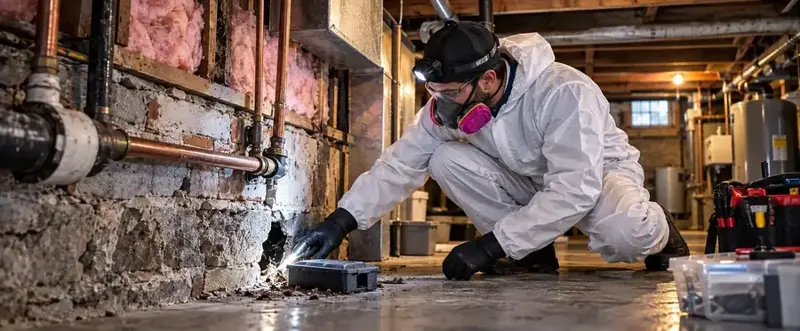
Wear gloves and a mask, wet the area with disinfectant, wait five minutes, wipe up with paper towels and double bag the waste. Do not sweep dry droppings.
Why species matters
Norway rats and roof rats need different plans. Norway rats burrow and nest low. Roof rats climb and nest high. The droppings give an early clue about where to look first: basements and yards for Norway rats, attics and rooflines for roof rats.
Photographing droppings for a technician
Take a clear photo next to a coin or ruler, and note where you found it. Send the photo when you call. It speeds up identification and helps us bring the right traps and materials.
Cleaning large amounts
For small amounts, wet cleaning with gloves and a mask is enough. For large accumulations in attics, crawl spaces or sheds, use a professional sanitation service. Dry dust from old droppings is the main health concern, and good protective equipment matters.
Common lookalikes
Large cockroach droppings, bat guano, lizard droppings and seeds can look like rat droppings. Bat droppings crumble into a shiny powder because of insect parts. Rat droppings are firm when fresh. A photo helps with identification when you are not sure.
What to do next
Clean the droppings, then watch for new ones. Set traps in the areas where droppings appear and look for entry points. If droppings are plentiful, expect a nest and plan for sealing and follow up.
Droppings by location
Near burrows: groups of capsule shaped droppings. In attics: scattered smaller pointed ones suggest roof rats. Near food storage: mixed sizes suggest several animals. Location tells you the likely nest.
Following up after cleaning
Mark the cleaned spot with a small piece of tape and check daily. New droppings within a day or two mean active rats and a need for traps and sealing.
A closer look at size and shape
A Norway rat leaves droppings that look like dark capsules with blunt ends, about the size of a large raisin. A roof rat leaves smaller spindle shaped droppings with pointed ends. Compare with a coin: a penny is about three quarters of an inch across, so a Norway rat dropping is close to that length.
Reading the pattern
Rats tend to defecate along travel routes and near nests. Piles near burrows or beside walls show a regular path. Scattered droppings in attics show where roof rats walk. A heavy concentration near food means a feeding spot.
Fresh versus old
Fresh droppings are shiny and soft and become dull and hard after a few days. Grey, crumbling droppings are old. If you find fresh droppings in several spots, rats are active and probably numerous.
Safety steps for cleanup
Ventilate the area. Put on gloves and a mask. Spray with disinfectant until damp and wait. Use paper towels to pick up. Bag and seal the waste. Disinfect the surface. Wash your hands. Repeat if needed. Do not sweep or vacuum dry droppings.
Why identification helps
Knowing the species lets you choose traps, bait locations and sealing materials. It also tells you whether to look in the yard, basement or attic. If in doubt, take photos and call a professional.
Comparing with similar droppings
Cockroach droppings are tiny and speckled. Squirrel droppings are rounder and lighter. Bat guano crumbles. Compare shape and location.
Using droppings to find nests
Concentrations near walls and pipes point to nests nearby. Fresh droppings show active use.
Photo tips for experts
Place a coin beside the droppings and photograph in good light.
Safe disposal of droppings
Wet the droppings with disinfectant, wait five minutes, wipe with paper towels, bag and wash hands. Do not use a regular vacuum or broom.
Recording evidence for landlords
Photograph with a ruler, note the date and place, and send to the manager in writing. This starts the paper trail.
Frequently Asked Questions
Do rat droppings smell?
They can, especially with urine and nesting material.
How can I tell rat from mouse?
Size is the main clue. Rat droppings are about three times as long.
Is cleanup safe to do myself?
With gloves, a mask and wet cleaning, yes. For large amounts, a professional cleanup is safer.