Mouse in the House? What to Do in the First 24 Hours

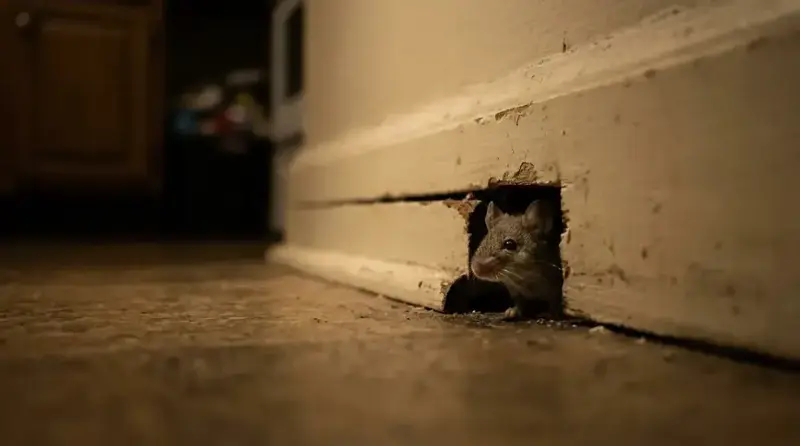
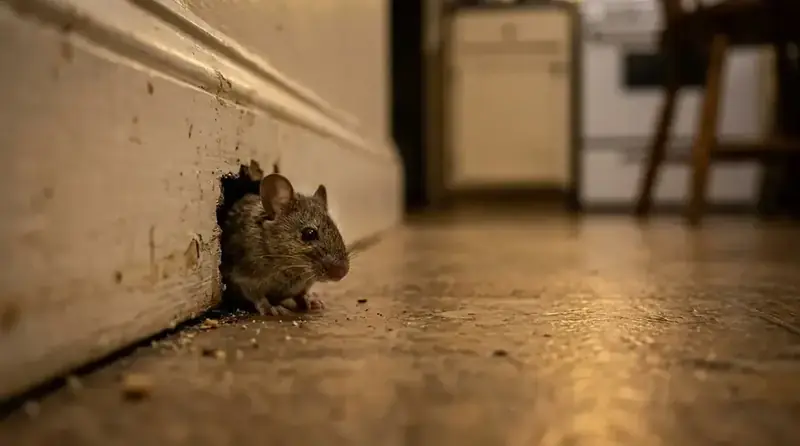
One mouse usually means more. Act quickly: protect food, set traps, and find the opening.
- Protect food
- Set traps tonight
- Look for the opening
- Clean up
- Keep pets away
- Call if it continues
- What not to do
- How to know it is more than one
- When to get help
- A first night checklist
- What to ask a pro on the phone
- Households with children
- Households with pets
- Stay calm and gather information
- The right traps in the right places
- Sealing while you trap
- Cleaning up
- When to call
- First hour checklist
- The first week
- Common mistakes
- Pets, children and food safety
- Keeping calm with a live mouse
- Keeping notes that help
Protect food
Move food into glass or metal containers with tight lids. Clean crumbs and wipe counters.
Set traps tonight
Place several snap traps along walls near activity. Bait with peanut butter.
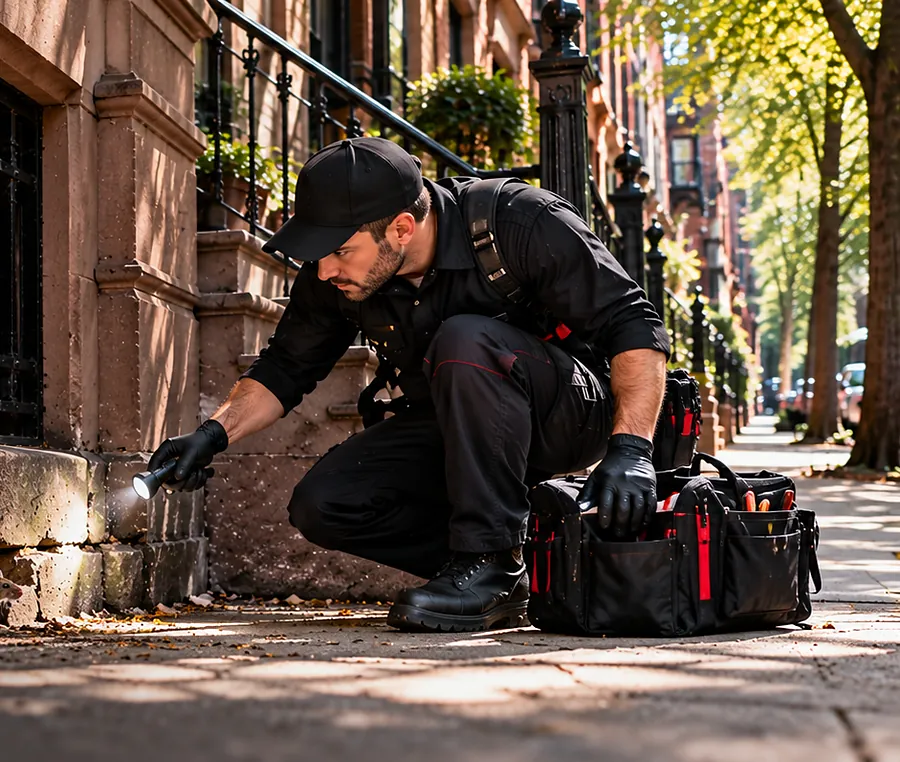
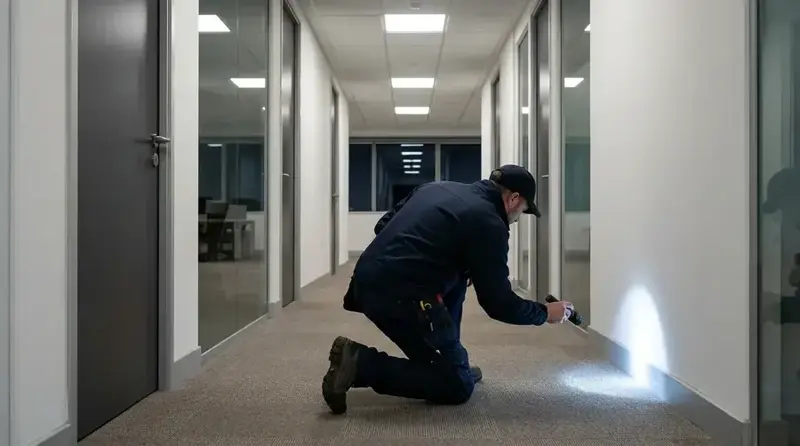
Look for the opening
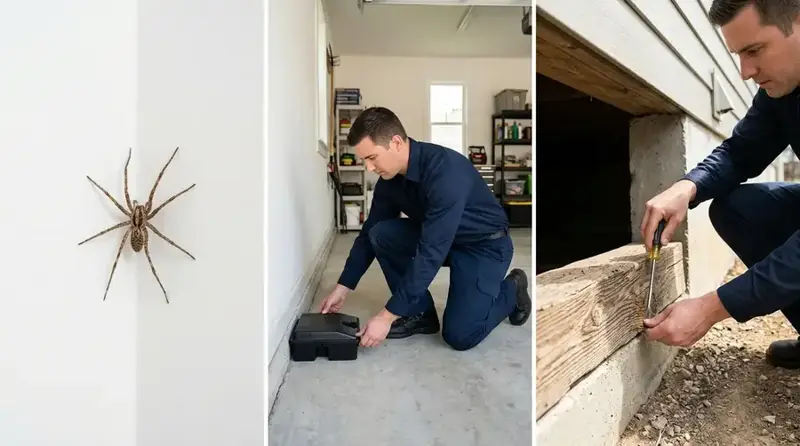
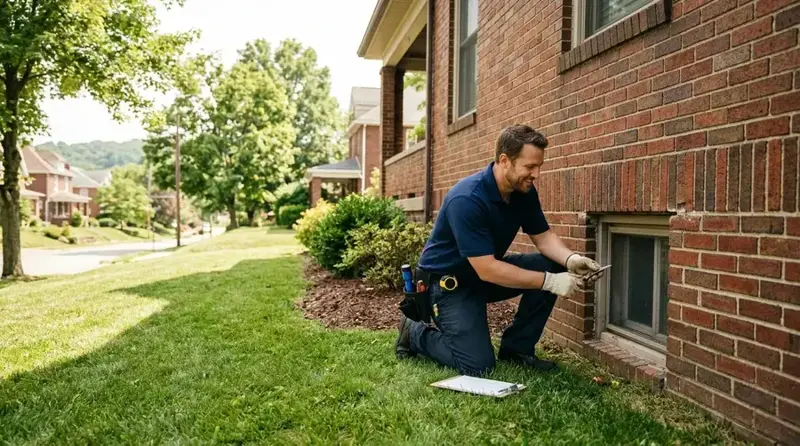
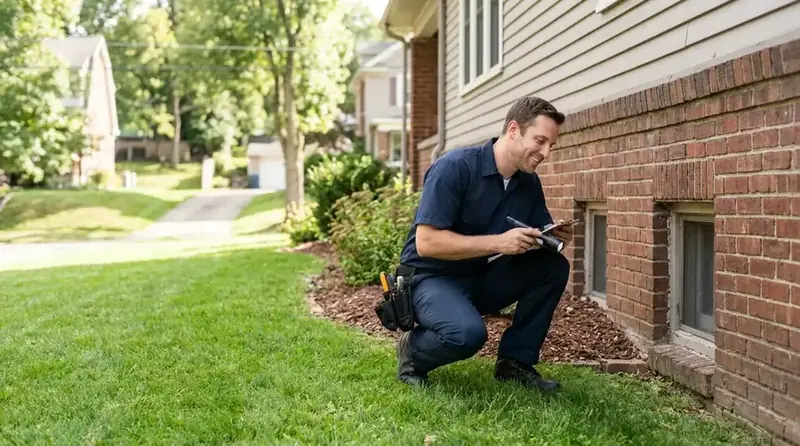
Check under sinks, behind the stove and around pipes. A flashlight and a mirror help.
Clean up
Wet and wipe droppings with disinfectant. Do not sweep.
Keep pets away
Pets can be hurt by traps or poisons. Place traps in places they cannot reach.
Call if it continues
If you see mice in daylight or catch more than a couple, there is probably a nest.
What not to do
Do not chase the mouse, block holes while it is inside, or use poison where pets or children can reach it. Do not leave food out. Do not ignore the first sighting.
How to know it is more than one
Droppings in several rooms, mice in daylight, grease marks, or noises in more than one spot all suggest several mice. Set more traps and plan on sealing.
When to get help
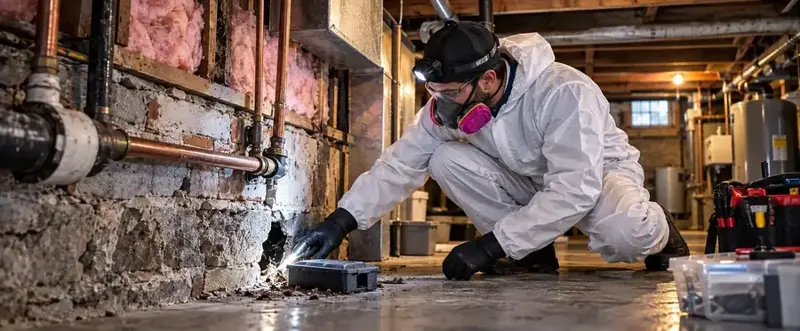
If you cannot find the entry point, if the problem returns after a week, or if you have young children or someone with asthma, call a professional.
A first night checklist
Store food. Place six traps. Wipe counters. Take photos of droppings. Check pet access. Write down where you saw the mouse. In the morning, check traps and look for entry points. Repeat for three nights.
What to ask a pro on the phone
Do you inspect first? Do you seal the openings? How many visits? What is the price? Do you offer a guarantee? Clear answers help you choose.
Households with children
Place traps behind appliances or inside covered stations. Keep cleaning products out of reach. Wash hands after any contact. If a child touches droppings, wash the area and the child's hands.
Households with pets
Use enclosed traps. Do not use bait. If your pet brings in a mouse, remove it with gloves and clean the area.
Stay calm and gather information
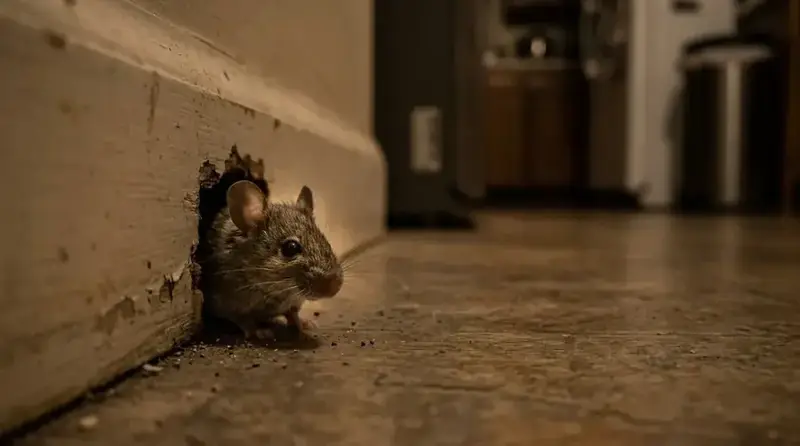
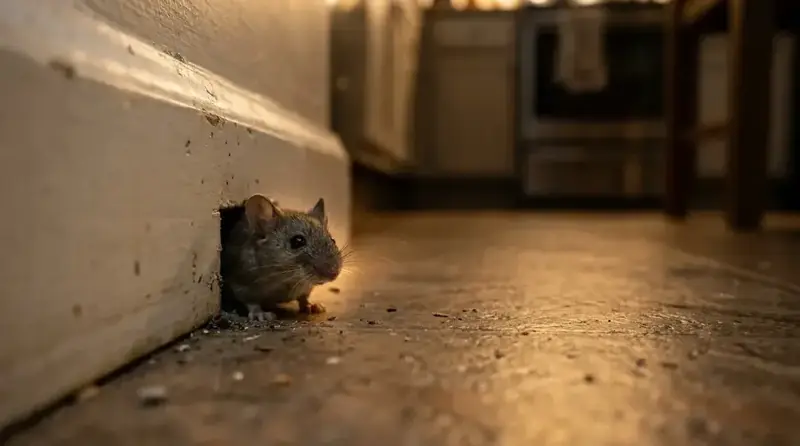
Seeing one mouse is common and fixable. Note the time, place and what the mouse was doing. Mice seen at night near food are normal. Mice seen in daylight suggest a larger population or a disturbed nest. Check for droppings, gnaw marks and nests to get a sense of the scale.
The right traps in the right places
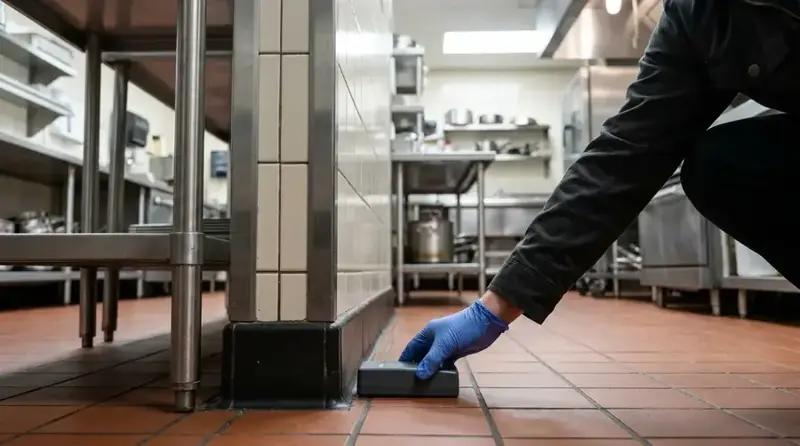
Set snap traps in pairs, perpendicular to walls, with the trigger side next to the wall. Place them behind the stove and refrigerator, under sinks, in the pantry and along runways where droppings appear. Use a pea sized dab of peanut butter. For pets and children, use enclosed traps.
Sealing while you trap
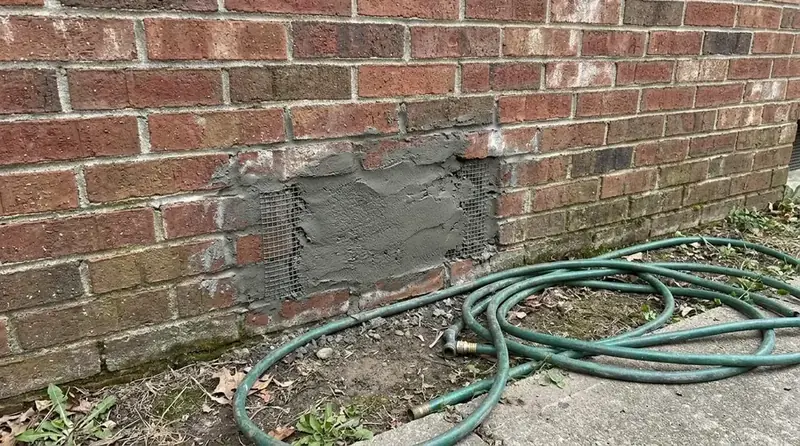
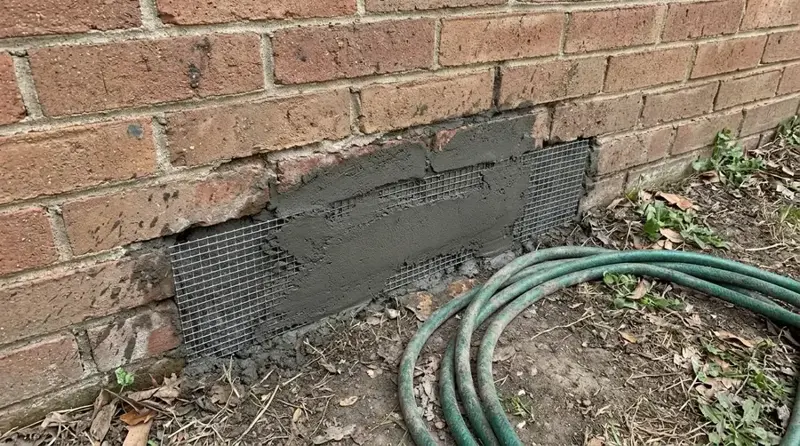
Fill obvious gaps with steel wool and caulk after you confirm the mouse is out. Add door sweeps. Seal around pipes. Keep food sealed. This prevents new mice while you remove the current ones.
Cleaning up
Do not sweep or vacuum droppings. Wear gloves, wet the area with disinfectant, wipe it up, bag the waste and wash your hands. Disinfect surfaces where mice walked, especially in kitchens.
When to call
If mice appear in multiple rooms, if you hear them in walls, or if you cannot find entry points, call a professional. We can often schedule an inspection quickly, depending on crew location and schedule.
First hour checklist
Stay calm, keep pets away, note where you saw the mouse, set traps in that area and store food. Do not chase it into walls. Close doors to limit its travel.
The first week
Check traps each morning, seal gaps found, clean and disinfect. Record catches. If you catch more than one, plan professional inspection.
Common mistakes
Using too few traps, using too much bait, leaving gaps open and ignoring sanitation. Fix these to speed up results.
Pets, children and food safety
Keep traps in places pets and children cannot reach, such as behind appliances or inside covered stations. Throw away food mice have gnawed and wash counters with soap and water. Wash dishes and utensils stored in infested drawers. Wear gloves when removing mice or droppings and wash your hands afterward. If a pet catches a mouse, keep an eye on it for stomach upset and call the vet if you see vomiting or lethargy.
Keeping calm with a live mouse
If you see a mouse, do not chase it. Close doors to confine it, open an exit if there is one and place a trap in its path. Most mice avoid people and will return to the wall.
Keeping notes that help
Write down where you saw the mouse, the time and what traps you set. Check the notes after a week. A single sighting with no catches and no droppings is likely resolved, but new signs mean it is time for professional inspection.
Frequently Asked Questions
Is one mouse an infestation?
Often not alone. Mice breed quickly, so take it seriously.
Will it leave on its own?
Unlikely.
Should I use poison?
Traps are safer in occupied homes.