Mouse Control
Apartments, kitchens, pipes and shared walls.
In an apartment building, the mouse in your kitchen may have come from the basement, the trash room or the unit next door.
Short answerApartment rodent control looks at your unit and the building around it. Mice use wall voids, pipe chases and risers, so lasting results usually need the owner or manager involved as well as work inside your apartment.
Shared walls, shared plumbing and shared trash areas give rodents routes between units. Treating one apartment alone can push activity next door and back again. Openings around pipes under sinks, behind stoves and in bathrooms are the usual routes inside a unit.
Find out more about mouse control and why mice move between apartments.
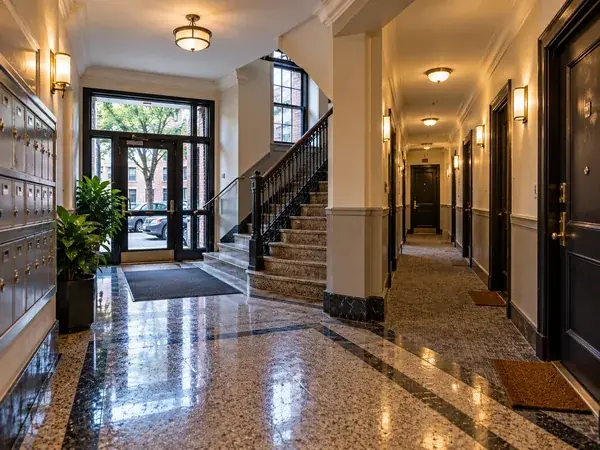
A mouse in one unit can trace back to the basement, the trash room or the wall shared with a neighbor, so an apartment building inspection looks well past your own front door.
In most NYC rentals the owner is responsible for pests. In buildings with three or more apartments, Local Law 55 requires owners to inspect for pests annually and respond to complaints. Write to the landlord or managing agent, keep a dated copy, and use 311 if needed. This is general information, not legal advice. Read the tenant guide.
Kitchen and bathroom pipe openings, behind appliances, baseboards and cabinets, doors and closets, plus any access to common areas such as basements and trash rooms.
Not sure what you are dealing with? An inspection finds the source and sets the scope.
Mice need very little: a gap about the width of a pencil, a little food and a quiet place to nest. In apartment buildings they travel through wall voids, pipe sleeves and shared utility chases, so the opening may be in a neighbor's unit or the basement rather than yours. Finding the route matters more than adding more traps.
Attached buildings share wall voids, pipe chases, risers, trash areas and basements. Mice use those as travel routes, so treating one unit can push activity next door and back again. Lasting results in multifamily buildings usually depend on inspecting common areas and coordinating with the owner or manager, not treating a single apartment in isolation.
In most NYC rentals the owner is responsible. City rules require property owners to keep buildings free of rats, and owners of buildings with three or more apartments must also address pests inside apartments under Local Law 55. Tell the landlord or managing agent in writing, keep a copy, and use 311 if nothing happens. This is general information, not legal advice.
Start with the landlord or managing agent, in writing, and keep a dated copy. That creates a record and gives the owner a chance to act. If the owner does not respond, or the problem is severe, report it through 311. You can report rats or mice and the conditions that attract them.
Apartments, kitchens, pipes and shared walls.
Common areas, supers and building wide plans.
Steps for renters.
Activity that keeps coming back usually means the source or the entry route is still open. More traps do not fix that. An inspection looks for where they are getting in and what is drawing them.