Pipe Penetrations
Water, gas, drain and radiator lines, often with degraded sleeves.
Exclusion is what decides whether a rodent problem comes back. It means finding every opening rats and mice can use and closing each one properly.
Short answerRodent exclusion is the inspection, mapping and sealing of every entry point rats and mice can use, with materials they cannot chew through. It works alongside trapping and cleanup, and it is the step that stops the same problem from returning.
Trapping and bait deal with the animals that are there. They do not change how the animals arrived. When the opening stays, the food stays and the shared wall stays, the next rodent follows the same path.
Exclusion is the work of finding those paths and closing them with materials rodents cannot chew through. It is the difference between treating the symptom and fixing the cause. It is also where most do it yourself attempts fall short, because the gaps that matter are often behind appliances, inside wall voids and around pipe sleeves.
These are the openings inspectors check first in NYC buildings.
Water, gas, drain and radiator lines, often with degraded sleeves.
Cracks and holes where masonry has settled or been patched badly.
Cable, conduit, meter and HVAC lines entering the building.
Worn sweeps, gaps at thresholds, cellar and areaway doors.
Where walls meet floors, ceilings, cabinets and stairs.
Damaged vent screens and roof edges reaching attics.
Broken or open lines and unsealed floor drains.
Where most of the above meet at ground level.
For a closer look, see the rodent entry point guide.
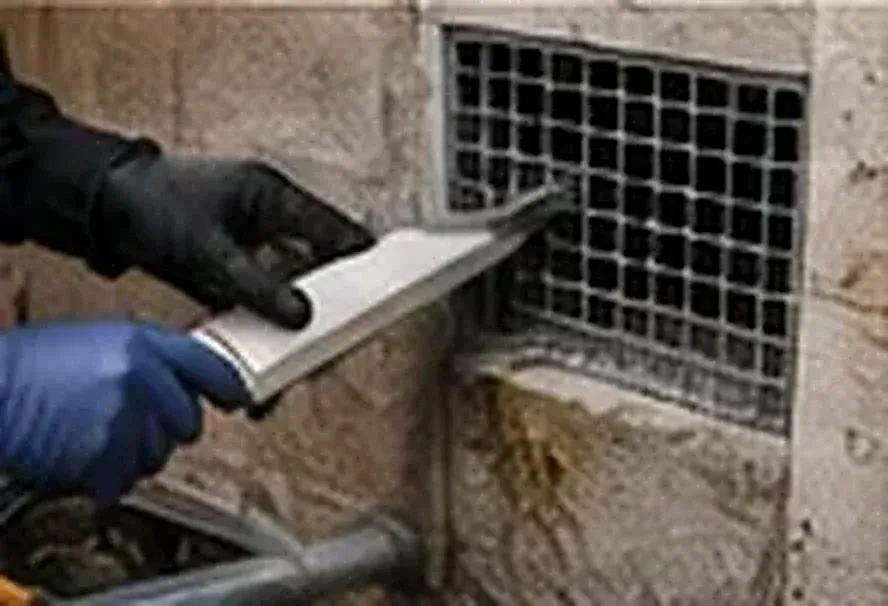
Preventive protection for vulnerable areas.
Closing specific openings found in inspection.
Where exclusion starts.
Want the entry points mapped? Start with an inspection.
Sealing stops mice from using the openings you closed, but only if every route is found and the material holds. Mice already inside must be trapped or removed first, or they stay sealed in with you. Sealing without an inspection tends to miss gaps behind appliances, inside wall voids and around pipe sleeves.
Trapping and bait deal with the animals that are there. They do nothing about the openings, food and shelter that let new ones in. Where the entry route stays open, activity tends to return. That is why an inspection looks for how rodents are getting in, and why exclusion sits beside control rather than after it as an afterthought.
Materials rodents cannot chew through, matched to the opening. That usually means metal mesh or hardware cloth, sheet metal, and cement or masonry fillers for masonry gaps. Foam or plain caulk on its own is not enough because rodents chew it out. The right choice depends on what the opening is, what surrounds it and how it will be used.
Rats can use damaged drain or sewer lines, and gaps where pipes pass through walls and floors are a common way in. Coming up through a toilet is rare and usually points to a broken line. An inspection that looks at the lines and every pipe penetration is how you find out which applies to your building.
Usually because the way in was never closed, or because a neighboring unit or the basement keeps supplying new mice. Trapping removes the animals you have. It does not change the openings, the food access or the shared walls that brought them. Recurrence is a signal to inspect again, not to add more traps.
Basements and cellars sit at ground level and hold pipes, utility lines, older masonry, storage and access to trash areas. That combination gives rodents entry, shelter and food in one place. In many NYC buildings the cellar is also where shared utility runs connect to the upper floors, so activity below can show up as noise or droppings above.
Preventive protection for vulnerable areas.
Closing the specific openings an inspection finds.
Burrows, droppings, garbage and ground line problems.
Apartments, kitchens, pipes and shared walls.
Activity that keeps coming back usually means the source or the entry route is still open. More traps do not fix that. An inspection looks for where they are getting in and what is drawing them.